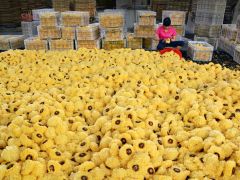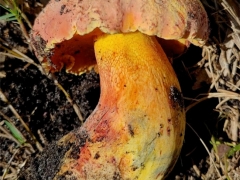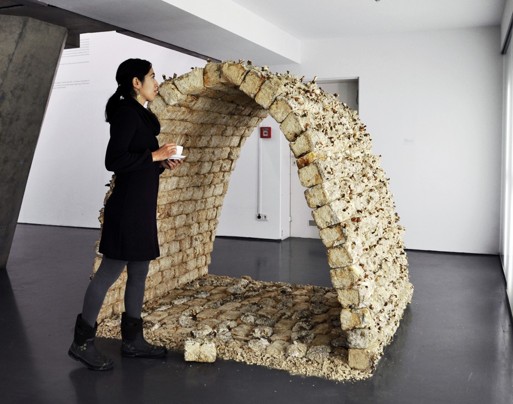
Phil Ross, an artist, inventor and amateur mycologist, is attempting to patent a method for making building materials out of a supermarket staple: the mushroom. But not the kind you’d want to cook up for dinner. “It’s not the tasty caps that Ross is after, but the rootlike fibers of mushrooms from an enormous underground tangle called mycelium,” Rebecca Horne explains in a post on Discover magazine’s Visual Science blog, adding that dried mycelium can form a lightweight, mold- and water-resistant, fireproof material that is an effective insulator. Apparently, it’s pretty sturdy stuff, too. Ross has used the fungus bricks to build sculptures. A 6-by-6-foot archway made using the bricks was so strong that “multiple saw blades and metal files were destroyed” in its construction, Horne reports. A start-up called Ecovocative Design is focusing on the more practical side of fungal durability. The company is developing mushroom-based alternatives to plastic foam and insulation. Sure, it sounds sort of gnarly, but the company’s stand-in for Styrofoam comes with one major benefit over its competitor: It’s biodegradable.
Archaeology
Cave of secrets
National Geographic, October issue
In this month’s National Geographic, Michael Finkel writes about Pete Athans, who leads a team of archaeologists who are doubling as mountaineers to excavate cliff-side caves in the Mustang district of Nepal. It’s a time-consuming task: According to conservative estimates, there are about 10,000 caves, which were used as dwellings, storage spaces and burial sites. From an archaeologist’s perspective, it’s the burial sites that hold the most promise. Inside, researchers have found remarkable artifacts, including murals and Buddhist manuscripts. Some held macabre mysteries, such as bones that were stripped of their flesh before they were buried. Don’t get the wrong idea, though. “This wasn’t whacking and hacking,” explains the team’s bone expert, Jacqueline Eng. “All evidence indicates there was no cannibalism here.” Instead, the burial style may have had some relationship to the Buddhist practice of sky burial, where bodies of the dead are sliced up to make them easy pickings for hungry vultures.