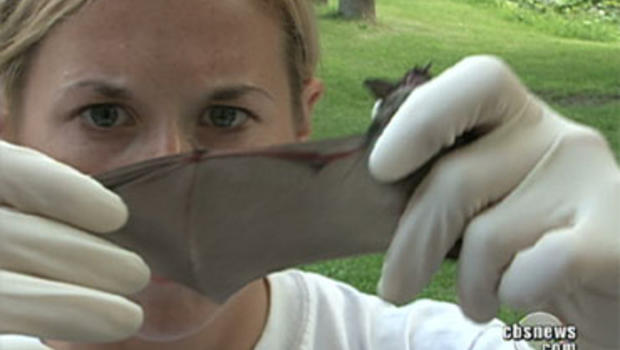
When evidence of a disease that has decimated bat populations in the Northeast turned up on Kentucky's doorstep, Hazel Barton felt obligated as an avid caver to offer her help.
The third-floor lab at Northern Kentucky University's Natural Science Center where she teaches and guides research is one of just a few in the world that studies the types of caves that bats find hospitable for hibernating.
An estimated 1 million bats have succumbed to
Tennessee and Kentucky are being monitored closely.
Barton is working with research technician Marcelo Kramer and three NKU students to identify compounds that stop the fungus associated with white-nose syndrome. In October, it was selected for one of six federal grants.
There are 45 species of bats in North America and seven of those that live in the area impacted by white-nose syndrome are being wiped out by it, Barton said. Kentucky is home to more than a dozen bat species. The fungus grows into the bats' skin, causing extreme irritation that arouses them from their slumber to groom. The activity burns up fat reserves, said Brooke Slack, bat biologist for the Kentucky Department of Fish and Wildlife Resources, and the bats ultimately starve to death.
Bats fill a unique ecological niche by helping control the insects that fly at night. The typical diet of a bat includes moths, beetles and water-born insects like mosquitoes. A reduced bat population will be noticed.
The U.S. Fish and Wildlife Service has recommended a moratorium on caving activities in states where white-nose syndrome has been documented and states adjacent to those.
The leap from New York to West Virginia suggests cavers may be contributing to the spread of white-nose syndrome. To that end, Barton conducted research that aided in the development of a decontamination protocol for cavers and their equipment. The research found that certain cleaning agents are effective at killing the fungal spores associated with white-nose syndrome.
A refrigerator in Barton's lab is stocked with petri dishes containing fungi collected by swabbing bats and cave surfaces.
A couple of the compounds have found to be effective on fungi, she said.
"We're actually doing field studies with these to see if we can use those to protect the bats," Barton said. "We don't want to make things worse. We want to make things better."