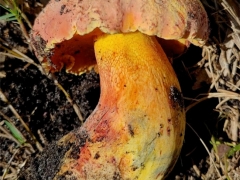
Although mushrooms are classified as vegetables by the U.S. Department of Agriculture and are shelved in the grocery stores as such, they definitely aren’t true vegetables, as they don’t have leaves, roots or seeds but are in fact an edible fungus.
The most popular mushroom in Canada is the white button mushroom Agaricus bisporus, followed by brown and portabella mushrooms. Specialty mushrooms, such as shiitake, oyster, king oyster and enoki, are gaining in popularity but are grown on a much smaller scale than the above three.
There are more than 100 mushroom farms in Canada, with 50 per cent of the nation’s production in Ontario, 35 per cent in British Columbia, 10 per cent in the Prairies and five per cent in Quebec and Maritimes. Chatham-Kent represents about five per cent of the mushroom production in Ontario. There are over 200-million pounds (91,000 tonnes) of mushrooms grown in Canada annually with the majority sold fresh and a small portion canned.
Mushrooms are farmed in compost, which is usually created from an assortment of straw, gypsum, water and manure. After the mixing is complete, the compost is pasteurized to kill any and all pathogens before the compost is put into the cultivation room along with casing soil (peat moss) and the mushroom spawn is added to the compost. The spawn starts growing from the compost into the casting soil, which the farmer will water.
After a couple days, watering will stop and a humid warm climate occurs stimulating a summer climate – at this point the mushroom grows to the surface of the soil. once it reaches the soil surface, the farmer starts to cool down the cultivation room, which stimulates harvest conditions. Because of colder air and lower CO2, the fluffy mycelium, which functions somewhat like a root, starts to contract and, after five to six days after cooling down, forms pins or pinheads.
After this, relative humidity in the room is slowly lowered, so that the pins start growing into mushrooms.
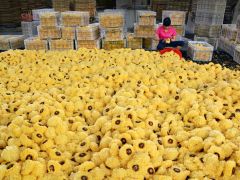
Mushrooms are harvested by hand to avoid bruises and scratches and takes place in “flushes”. The first flush takes three to five days to pick, the second flush comes after about five to seven days after and yields a little less, and it takes six to eight days before the third flush can be harvested and is usually of lower quality, because diseases and pests are increasing.
At the end of the cultivation, the cultivation room and the spent compost are heated to 70 C to kill all diseases and pests. After harvesting and sanitizing, the compost is removed from the room and once the room is cleaned a new cultivation cycle can begin.
Overall, each growing cycle may take from seven to 12 weeks depending on the management program.